

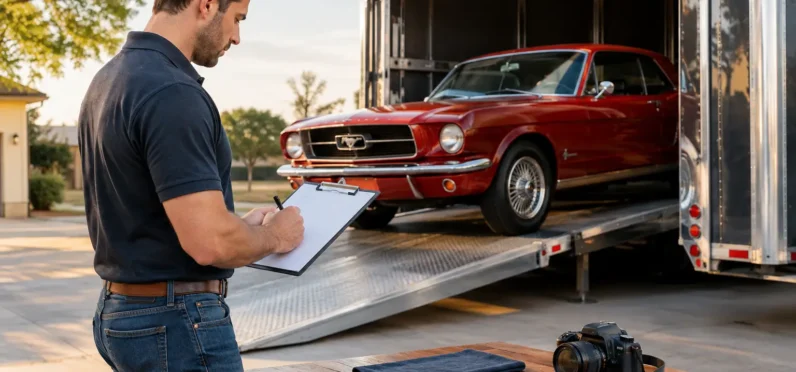
A classic car is not simply another vehicle being moved from point A to point B. Its finish, original trim, low ground clearance, and hard-to-replace parts all deserve attention before a carrier arrives. This classic car transport checklist helps you prepare for pickup, ask the right questions, and keep the delivery process clear from the first estimate through final inspection.
Start Your Classic Car Transport Checklist Early
The best time to prepare is before you accept a carrier option, not while the driver is waiting at the curb. Give yourself several days to confirm the vehicle’s condition, gather documents, and arrange a pickup location that a large transport truck can safely access.
Classic vehicles can require more planning than newer daily drivers. A car that sits low, has a non-functioning parking brake, leaks fluids, or needs special loading care should be disclosed when requesting a quote. Clear details help your transport coordinator match the shipment with a carrier that has the appropriate equipment and experience.
Choose open or enclosed transport based on the car
Open transport is a practical and more affordable choice for many classic cars, particularly driver-quality vehicles that are regularly used and in good mechanical condition. It is widely available, which can also make scheduling more flexible.
Enclosed transport offers greater protection from road debris, weather, and public exposure. It is often the preferred option for restored, rare, high-value, or show-bound vehicles. The trade-off is cost and, in some lanes, fewer available carriers. If preserving a concours-level finish or protecting rare exterior components is your priority, enclosed shipping is usually worth discussing.
Also tell your coordinator if the vehicle has extremely low clearance, wide tires, a long front overhang, or modified suspension. These details affect loading methods and may influence which trailer is the safest fit.
Verify the Transport Plan Before Booking
A clear plan prevents the most common shipping surprises. Confirm whether the service is door-to-door, meaning the carrier gets as close to your address as legal and safe access allows. Residential streets with low branches, tight turns, weight limits, or limited room for a multi-car hauler may require a nearby meeting point such as a shopping center or wide street.
Ask for the pickup and delivery windows rather than expecting an exact appointment immediately. Carrier routes, traffic, weather, hours-of-service rules, and other vehicles on the trailer all affect timing. A professional coordinator should communicate updates as the driver is assigned and the shipment progresses.
Before dispatch, make sure the order reflects the correct year, make, model, operable condition, addresses, contact numbers, and any special instructions. If the car does not run, say so plainly. Inoperable vehicles can still be shipped, but they need suitable loading equipment and may carry an additional charge.
It is also wise to understand payment timing before the carrier is assigned. With USA Auto Shipping, the deposit is charged after a carrier accepts the shipment, while the remaining balance is paid at delivery. Knowing that structure in advance helps you avoid last-minute confusion.
Prepare the Vehicle for Safe Loading
A carrier needs a vehicle that can be loaded safely and inspected accurately. Unless the driver provides different instructions, keep the fuel level at roughly one-quarter of a tank. That is enough for loading and unloading without adding unnecessary weight to the trailer.
Make sure the battery is charged, tires are properly inflated, and the vehicle can steer and brake as expected. If it has a battery disconnect, unusual ignition procedure, hidden kill switch, or temperamental transmission, write down straightforward operating instructions. Hand them to the driver only if they are necessary for loading or unloading.
Remove or secure loose accessories. This includes removable spoilers, antennas, convertible covers, dashboard items, detachable mirrors, and specialty trim that could shift during transit. Fold in mirrors where possible. Confirm the hood, trunk, doors, and convertible top latch securely.
Avoid using a car cover unless the carrier specifically approves it. Covers can flap in the wind on an open trailer, potentially rubbing against paint or concealing a condition issue during inspection. For enclosed transport, ask the carrier coordinator what is appropriate for the vehicle and route.
Do not pack household goods, tools, collectibles, or spare parts in the vehicle. Personal items are generally not covered by the carrier’s cargo insurance and can create weight, inspection, or regulatory problems. A small amount of factory-installed equipment is different, but the cabin and trunk should otherwise be empty.
Document Its Condition Before Pickup
A detailed condition record is one of the most valuable steps on any classic car transport checklist. Wash the vehicle first if practical. Dirt can hide chips, scratches, and paint imperfections, making a fair pickup and delivery inspection harder.
Take date-stamped photos and video in good light. Capture each side of the car, the roof, hood, trunk, bumpers, wheels, glass, interior, odometer, engine bay, and undercarriage if it has visible leaks or known low-clearance areas. Photograph existing flaws closely, including cracked glass, paint checking, rust spots, dents, and torn upholstery.
Write down the mileage and note any mechanical or cosmetic conditions the driver should know about. For example, record whether the car has an oil seep, non-working window, stiff door latch, or exhaust that sits particularly low. This is not about making the process difficult. It gives everyone a shared, accurate baseline.
At pickup, inspect the vehicle with the driver and review the bill of lading, often called the vehicle condition report. This document records the car’s condition when it enters the driver’s care. Do not rush through it. Point out existing damage, verify the mileage, and keep your copy. The same document will be used during delivery inspection.
Confirm Insurance and Contact Details
Carrier insurance is a central part of shipping a valuable vehicle, but coverage is not a reason to skip preparation. Ask your coordinator about the carrier’s insurance information and understand what applies while the vehicle is in the driver’s care. If your classic has a stated-value or collector-car policy, you may also want to notify your own insurer that it will be transported.
Have the right people available at both ends of the move. The pickup contact and delivery contact should be able to answer calls, meet the driver, inspect the car, and sign the bill of lading. If you cannot be there, designate a trusted representative and send them the condition photos, instructions, and key details beforehand.
Keep the vehicle keys organized. Provide the driver with one working set, and retain a spare set yourself. Do not leave the title, registration, personal identification, or irreplaceable documents inside the car. Registration may be useful to have available if requested, but it should remain with you rather than travel in the vehicle.
Be Ready for Delivery, Not Just Pickup
Delivery day is when careful preparation pays off. Meet the driver during daylight if possible, especially when inspecting dark paint, chrome, glass, and fine bodywork. Compare the vehicle against your pickup photos and the bill of lading before signing the final delivery paperwork.
Look at the roofline, front valance, rocker panels, wheels, mirrors, bumpers, and lower body areas. Check that the vehicle starts and rolls as expected when it is safe to do so. If you notice new damage, document it with clear photos, note it on the bill of lading before signing, and contact your transport coordinator promptly. A condition concern is easier to address when it is recorded at delivery rather than discovered later.
Weather, traffic, and route changes can occasionally shift delivery timing. Keeping your phone available and maintaining a flexible handoff plan makes that final step much easier. A classic car move should feel controlled from start to finish: clear expectations, careful handling, regular communication, and a documented inspection when your vehicle arrives.