

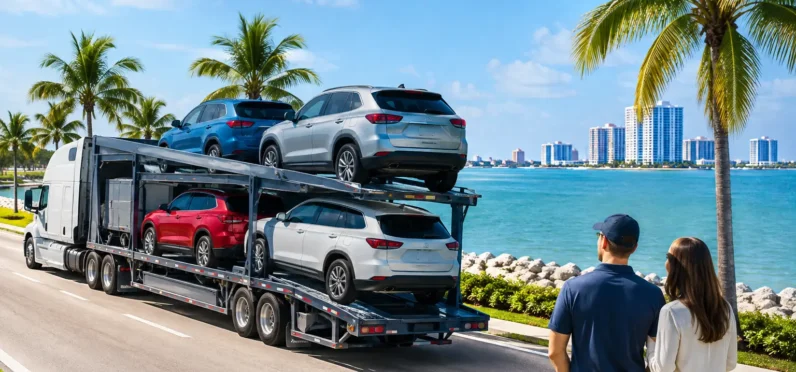
A Florida vehicle shipping guide matters most when your move has a deadline, your schedule is already full, and driving hundreds or thousands of miles is not a practical option. Whether you are heading south for the season, relocating out of state, buying a vehicle from a distant seller, or sending a student’s car to school, auto transport lets you move the vehicle without adding a long road trip to your plans.
Florida is one of the country’s busiest vehicle-shipping markets. Routes connecting Miami, Orlando, Tampa, Fort Lauderdale, and Jacksonville with the Northeast, Texas, Georgia, and California often have strong carrier demand. That can create good availability, but it does not make every quote, carrier type, or pickup window the same. The right choice depends on your vehicle, route, timing, and comfort level.
Start With the Right Shipping Option
Most standard sedans, SUVs, pickups, and daily drivers ship on an open carrier. These are the multi-car trailers commonly seen on highways. Open transport is usually the most affordable option because carriers can move several vehicles on one route. Your vehicle is safely secured, but it remains exposed to normal road and weather conditions during transit.
Enclosed transport places the vehicle inside a covered trailer. It costs more, and availability can be narrower, but it provides added protection from weather, road debris, and public visibility. It is often the better fit for classic cars, exotic vehicles, high-value luxury models, and vehicles with a show-quality finish.
Door-to-door service is another decision worth understanding. It generally means the carrier picks up and delivers as close to your specified addresses as safely and legally possible. Residential streets with low trees, tight turns, parked cars, or local truck restrictions may not accommodate a large hauler. In that case, you and the driver may agree on a nearby shopping center, wide street, or other accessible meeting point. That is normal coordination, not a reduction in service.
Florida Vehicle Shipping Guide: What Affects Your Price
Auto shipping is priced by the route and the shipment details, not simply by mileage. A Florida-to-New York move may be priced differently from a Florida-to-rural Montana move, even if the distance is comparable. Carriers consider where they can efficiently load and unload vehicles, how much demand is moving in each direction, and whether the route fits their existing schedule.
Your vehicle’s size and condition matter as well. A full-size truck or oversized SUV takes more trailer space and adds weight, so it typically costs more than a compact sedan. A vehicle that does not start, steer, brake, or roll normally needs special loading equipment and should be disclosed when requesting a quote. Giving accurate information upfront helps prevent dispatch delays or price changes at pickup.
Seasonality is especially relevant in Florida. Snowbird traffic can increase demand before and after the winter season, particularly on routes between Florida and the Northeast or Midwest. Prices may also rise when capacity is tight around holidays, during severe weather, or when you need a very short pickup window. Booking early usually gives a coordinator more carrier options and gives you more control over the schedule.
The lowest estimate is not always the best value. An unusually low price may be based on a rate that carriers are unlikely to accept, leaving the shipment waiting while the price is adjusted later. Review what the quote includes, the estimated pickup window, the carrier type, payment timing, and how updates will be handled. A clear quote is more useful than a number that cannot secure a truck.
How the Booking Process Should Work
Vehicle shipping can feel opaque because several parties are involved: you, the transport coordinator, and the carrier that physically moves the vehicle. A structured process makes it easier to know what is happening at every stage.
First, provide the pickup and delivery locations, vehicle year, make, model, operating condition, preferred dates, and transport type. A coordinator uses those details to identify appropriate carrier options and provide an estimate. If you have flexibility, say so. A broader pickup window can improve both availability and price.
Once you select an option, the shipment is dispatched to the carrier network. A carrier accepts the order when the route, timing, and compensation work for its schedule. This is the point at which a realistic plan becomes a confirmed transport arrangement. With USA Auto Shipping, the deposit is charged after a carrier accepts the shipment, while the remaining balance is paid at delivery according to the agreed terms.
After dispatch, the driver or a member of the coordination team confirms pickup details. Stay reachable by phone around your pickup dates, since drivers may need to adjust timing for traffic, weather, loading delays, or required rest periods. Reliable communication is one of the simplest ways to keep a shipment on track.
During transit, ask how status updates will be provided and who to contact if your schedule changes. Delivery timing is usually an estimated window rather than a guaranteed appointment. Interstate trucking involves real variables, including road conditions, other vehicle pickups, and hours-of-service rules. A good coordinator sets clear expectations instead of promising a time that cannot be responsibly guaranteed.
Prepare Your Vehicle Before Pickup
Preparation protects both you and the carrier. Clean the exterior enough to make an inspection easy, then take date-stamped photos from multiple angles. Include close-ups of existing scratches, dents, windshield chips, and wheel damage. At pickup, the driver records the vehicle’s condition on a bill of lading. Read it, compare it with your own photos, and make sure pre-existing damage is noted before signing.
Remove personal belongings, toll transponders, removable accessories, and valuables from the vehicle. Federal carrier rules and insurance policies generally do not cover household goods shipped inside a car. Extra items can also shift during travel, add weight, or create issues at inspection. If a carrier permits a limited number of personal items, get the allowance confirmed in advance rather than assuming it is included.
Leave about a quarter tank of fuel, unless the carrier provides different instructions. The vehicle should be operable, with tires properly inflated and the battery charged. Disable alarms if possible, fold in or remove loose antennae, and notify the driver about any special starting procedure, low clearance, leaks, or mechanical concerns.
For convertibles, classic cars, and luxury vehicles, document the condition with extra care. Enclosed transport may be worth the additional cost when preserving the finish or avoiding weather exposure is a priority. The choice is not about one option being universally better – it is about matching the protection level to the vehicle and your expectations.
Insurance, Inspection, and Delivery
Before pickup, ask for the carrier’s insurance information and understand how claims are handled. Licensed carriers carry cargo coverage, but policy limits, exclusions, and documentation requirements can vary. Insurance is most useful when the vehicle’s condition is accurately documented at both ends of the shipment.
At delivery, inspect the vehicle before signing the final paperwork and before the driver leaves. Check the areas shown in your pickup photos, look over the roof and lower panels in good light, and confirm that the vehicle starts and operates normally if practical. If you see new damage, note it clearly on the bill of lading and take photographs right away. Do not rely on a verbal conversation alone.
The final balance is commonly paid at delivery using the payment method specified during booking. Confirm that requirement early so the person receiving the vehicle is prepared. If someone else will accept delivery, make sure they have your inspection instructions and authority to sign.
Plan for a Better Florida Shipment
The best Florida vehicle shipment is rarely the one booked in a rush with the first quote you receive. It is the one built on accurate vehicle details, a realistic pickup window, the right carrier type, and clear communication from dispatch through delivery. Give yourself time to compare the terms behind each estimate, prepare the vehicle carefully, and stay available when the driver calls. That little preparation turns a complicated interstate move into a manageable handoff.