

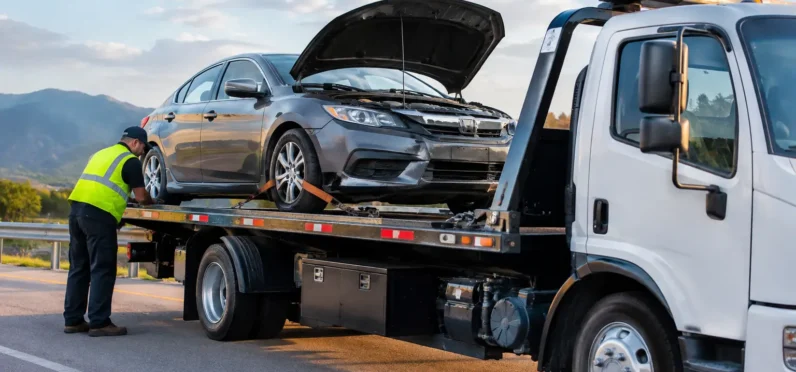
A vehicle that will not start, steer, brake, or roll can still travel across the country without adding hundreds or thousands of miles to its odometer. The key to how to ship inoperable vehicles is being fully accurate about the vehicle’s condition before a carrier is assigned. That information determines the equipment, loading plan, pickup timing, and price.
Shipping a non-running car is more specialized than shipping a vehicle that can be driven onto a trailer, but it is a common transport request. Whether you are moving a project car, sending an accident-damaged SUV to a repair shop, buying a classic car at auction, or relocating with a vehicle that needs mechanical work, the right carrier can move it safely and securely.
What Counts as an Inoperable Vehicle?
In auto transport, an inoperable vehicle is any vehicle that cannot be loaded and unloaded under its own power. A dead battery alone may not make a car inoperable if it can be jumped and driven, but a vehicle with an engine failure, seized brakes, flat tires, collision damage, or missing wheels requires special handling.
There are degrees of inoperability, and they matter. A car that rolls, steers, and brakes may be winched onto a standard open carrier. A vehicle that does not roll, has locked wheels, sits extremely low, or has significant accident damage may need additional equipment, a forklift arrangement, or a more specialized trailer. Do not assume that all non-running vehicles can be handled the same way.
When requesting a quote, be ready to explain whether the vehicle rolls freely, whether the steering works, whether the brakes release, and whether all four tires hold air. Share the make, model, year, exact pickup and delivery locations, and any modifications or visible damage. Clear details protect you from delays and help the transport coordinator match your shipment with a properly equipped carrier.
How to Ship Inoperable Vehicles Step by Step
Start with an accurate transport quote
A reliable quote begins with the facts. Select inoperable status when submitting shipment details, rather than choosing operable transport to obtain a lower initial estimate. Carriers plan their route, trailer space, labor, and loading equipment around the condition you provide. If the driver arrives expecting a running car and finds one that cannot move, the vehicle may not be loadable that day.
Distance, route demand, vehicle size, pickup flexibility, and transport type also affect pricing. A disabled full-size truck generally costs more to move than a compact sedan because it occupies more trailer space and may require more winching effort. Routes between major markets, such as Florida and Texas or California and New York, often have more carrier availability than rural routes, though timing still depends on the specific lane and season.
Confirm the loading method before dispatch
Most inoperable vehicles that roll can be loaded using a winch. The carrier attaches the winch carefully and pulls the vehicle onto the trailer at a controlled pace. This takes more time than driving a vehicle aboard, which is why inoperable transport carries an added charge.
Ask how the carrier expects to load the vehicle, particularly if it has low ground clearance, damaged suspension, a locked transmission, or non-functioning wheels. A standard winch may be appropriate for one vehicle, while another may require ramps, skates, a tilt trailer, or another solution. The goal is not simply getting the vehicle onto a truck. It is loading it without causing avoidable damage.
Prepare the vehicle for pickup
Even a non-running car needs basic preparation. Remove personal belongings and loose items from the cabin and trunk. Carriers are transporting the vehicle, not household goods, and unsecured items can shift or create damage concerns during transit.
If possible, make sure the tires are inflated, the steering wheel is accessible, and the parking brake can be released. Keep the keys available, including keys for the ignition, doors, trunk, and wheel locks if applicable. Let the driver know about any fuel leaks, fluid leaks, electrical issues, alarm problems, or parts that could detach during loading.
Take clear, date-stamped photos from every angle before pickup. Include close-up photos of existing scratches, dents, cracked glass, and damaged panels. This record supports the pickup inspection and gives you a useful point of comparison when the vehicle is delivered.
Be available for the pickup inspection
At pickup, the driver will inspect the vehicle and document its visible condition on the bill of lading. Read this document before signing it. If a family member, repair shop, dealer, or storage-yard representative will release the vehicle for you, make sure that person understands the car’s condition and has authority to sign.
Pickup locations need enough room for the carrier to operate safely. Residential streets, tight apartment entrances, low-hanging trees, and narrow roads can make direct pickup impractical. In that case, the driver may coordinate a nearby meeting place such as a wide parking lot or commercial area. This is normal and often prevents unnecessary risk to the truck, trailer, and vehicle.
Inspect carefully at delivery
The delivery inspection matters just as much as the pickup inspection. Compare the vehicle with your photos and the original bill of lading before signing the final paperwork. If you notice new visible damage, document it immediately with photos and note it on the delivery paperwork while the driver is present.
A carrier’s cargo insurance generally applies while the vehicle is in the driver’s care, but coverage and claims procedures can vary by carrier and circumstance. Ask for insurance details before shipment and keep copies of your transport documents. Prompt, accurate documentation gives you the strongest position if a concern needs to be reviewed.
Why Inoperable Auto Shipping Costs More
The added cost is not a penalty for having a broken-down vehicle. It reflects the extra work and equipment needed to move it. A driver may need a winch, additional straps, more loading time, and a trailer configuration that can accommodate the vehicle’s exact condition.
Price can also change when the vehicle’s condition is more complicated than described. For example, a car listed as rolling may arrive with seized wheels. An SUV described as having a dead battery may also have locked steering and flat tires. Those differences can require a different loading method or a different carrier altogether.
Flexibility can help manage the cost. If your pickup and delivery dates allow a wider window, a coordinator may have more carrier options to review. Open transport is usually the more economical choice for most everyday inoperable cars, trucks, and SUVs. Enclosed transport may be worth considering for a high-value classic, exotic vehicle, or collector car that needs added protection from road exposure.
Mistakes That Can Delay a Non-Running Vehicle Shipment
The most common problem is withholding details in an effort to reduce the quote. A low price based on incorrect information is not a real shipping plan. It can lead to a failed pickup, additional charges, or a frustrating wait for a carrier with the correct equipment.
Another mistake is leaving the vehicle in a difficult-to-access location without alerting the transporter. A car buried in a storage unit, blocked by other vehicles, or parked on a steep driveway may need to be moved or made accessible before the truck arrives. Confirm that the vehicle can be reached and that the driver can safely load it.
Finally, do not skip the condition reports. Even when a vehicle already has substantial damage, the pickup and delivery inspections create a shared record of its condition. They are a straightforward part of protecting your vehicle and your shipment.
Choosing the Right Transport Partner
For an inoperable shipment, communication is part of the service. You should know what condition has been quoted, whether winch service is included, how pickup coordination will work, and when payment is due. A transport coordinator can gather the right vehicle details, review carrier options, and keep you informed from dispatch through delivery.
USA Auto Shipping helps customers coordinate these moving parts by connecting shipments with qualified, licensed carriers and providing clear updates throughout the process. Once a carrier accepts the shipment, you can prepare for pickup with a plan rather than wondering whether the driver has the right equipment.
A non-running vehicle does not need to become a long-distance towing project. Give the carrier an honest picture of its condition, prepare access at both ends, and keep your inspection records organized. Those few practical steps make it far easier to move a vehicle safely, on time, and with confidence.