

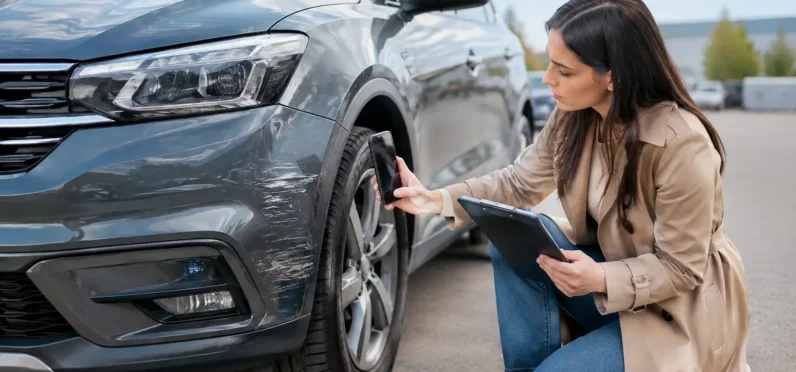
A vehicle can look perfect at pickup and still have a few details worth recording: a curb-scuffed wheel, a light scratch near the door handle, or a small chip in the windshield. Knowing how to document vehicle damage before transport gives you a clear record of the vehicle’s condition and helps prevent confusion at delivery. It is one of the simplest ways to protect yourself when shipping a car, truck, or SUV.
The goal is not to make the pickup process difficult. It is to create a fair, time-stamped baseline that you, the carrier, and the transport coordinator can reference if a question comes up later. A thorough inspection usually takes less than 20 minutes, and it can provide real peace of mind on a state-to-state or cross-country move.
How to Document Vehicle Damage Before Pickup
Start your inspection before the carrier arrives, ideally in daylight and after the vehicle has been reasonably cleaned. Dirt, road grime, snow, and heavy rain can hide scratches and dents that would otherwise be easy to see. You do not need a professional detailing job, but a quick wash makes the condition report more useful.
Walk around the vehicle slowly and look at each panel from more than one angle. Check the hood, roof, trunk or tailgate, front and rear bumpers, doors, mirrors, rocker panels, fenders, headlights, taillights, and glass. Do not forget the wheels and tires. Wheel rash, cracked trim, windshield chips, and lower bumper scrapes are often missed when an inspection is rushed.
Take photos before you write anything down. Use your phone’s camera at the highest practical resolution, and make sure date and time settings are accurate. A good set of photos should show both the overall vehicle and the close details of any existing issue.
For the clearest record, capture:
- A full view of the front, rear, driver side, and passenger side
- Close-up photos of every scratch, dent, chip, crack, or scuff
- Photos from a few feet away that show where the damage sits on the vehicle
- Images of all four wheels, tires, mirrors, lights, windshield, and roof
- The odometer, fuel level, vehicle identification number, and interior if relevant
Close-up photos alone can make it hard to identify the exact panel involved. Pair each close shot with a wider image. For example, if there is a scratch on the rear passenger door, take one photo showing the whole side of the vehicle and another that clearly shows the scratch.
Video can help, especially for high-value, classic, luxury, or modified vehicles. Walk around the vehicle in one continuous recording, narrating visible imperfections as you go. Still photos remain essential because they are easier to compare and share, but video adds helpful context.
Create a Simple Written Condition Record
Photos are strongest when they are supported by notes. Create a basic written record on your phone or in a document. List the vehicle’s year, make, model, color, license plate number, mileage, and date of inspection. Then note each existing condition issue by location.
Be specific rather than dramatic. Write “two-inch scrape on lower front bumper, passenger side” instead of “bumper damaged.” Note whether a dent is shallow or deep, whether a windshield chip has spread, and whether a panel has paint transfer. Clear language makes it easier to compare the vehicle’s condition at delivery.
If the car has mechanical concerns that affect loading, such as a dead battery, low ground clearance, a non-operating brake, or an inoperable engine, disclose those before dispatch. Those issues are not necessarily damage claims, but they can affect the equipment and handling the carrier needs. Honest information helps avoid delays and allows the transport team to coordinate the right carrier option.
Review the Pickup Inspection Carefully
At pickup, the driver will typically inspect the vehicle and record its condition on a bill of lading or vehicle condition report. This document is central to the shipping process. It identifies the vehicle, records visible pre-existing damage, and provides a condition baseline before the vehicle is loaded.
Walk around the vehicle with the driver when possible. Compare the driver’s notes with your own photos and written record. If you see a scratch, dent, or other issue that has not been marked, point it out and ask for it to be added before signing. You should receive a copy of the completed pickup inspection for your records.
This is not a moment to assume that a small mark does not matter. Minor imperfections can be difficult to distinguish later if they were never recorded. At the same time, be reasonable about normal wear. The purpose of the inspection is accuracy, not turning a few small cosmetic flaws into a dispute.
If someone else will release the vehicle for you, send them your photos and written notes ahead of time. They should understand that they are authorized to review the condition report, request corrections, and keep a copy. This is especially helpful for customers relocating early, purchasing a vehicle remotely, or arranging pickup from a dealership, family member, or storage facility.
Keep Your Evidence Organized
Save your pre-shipment photos, video, notes, and pickup inspection in one folder. Name files clearly, such as “pickup-front-bumper” or “delivery-driver-side-door.” Back them up to cloud storage or email them to yourself so they remain available if your phone is lost or replaced during a move.
Avoid editing photos in ways that alter their appearance. Cropping a photo for clarity is usually fine, but filters, heavy color adjustments, and annotations can raise unnecessary questions. Keep the original files whenever possible.
Inspect Again Before Signing at Delivery
The delivery inspection matters just as much as the pickup inspection. Before you sign the final bill of lading, examine the vehicle with the driver in good lighting. If delivery happens after dark, use a flashlight and your phone’s camera, or ask whether a careful inspection can be completed under better lighting when circumstances allow.
Compare the vehicle to your pickup photos. Check the same panels, mirrors, wheels, glass, lights, and lower body areas. Look for fresh scratches, dents, cracked pieces, paint transfer, or anything that does not match the original condition record. Also check that loose exterior accessories, such as antennas or removable trim, are present if they were documented at pickup.
If you find possible new damage, take photos immediately from wide and close angles. Photograph the area with the driver present if practical, then compare it to your original images. Do not wait until the next day to raise the issue. Once the final paperwork is signed without notation, it can become much harder to establish when the damage occurred.
Ask the driver to note the issue on the delivery bill of lading before you sign. Describe what you see, where it is located, and that it appears new compared with the pickup inspection. Keep a copy of that document, along with your delivery photos. A notation does not automatically decide fault or guarantee payment, but it preserves the facts needed for the claim review process.
What to Do If You Suspect Transit Damage
Stay calm and document the issue. Damage claims are easier to evaluate when the record is complete, but the outcome can depend on the facts, the carrier’s inspection findings, and applicable insurance coverage. Do not repair or discard damaged parts before receiving instructions unless safety requires immediate action.
Notify the transport coordinator as soon as possible and provide the pickup and delivery condition reports, your original photos, delivery photos, and a concise description of what changed. USA Auto Shipping can help customers understand the next steps and communicate with the carrier, while the carrier and its coverage process the reported issue.
A strong record does not require special equipment or automotive expertise. It requires a careful walk-around, clear photos, accurate paperwork, and a final inspection before delivery is signed. Taking those few extra minutes at pickup and delivery keeps the process transparent and gives you a better foundation for a safe, secure vehicle shipment.