

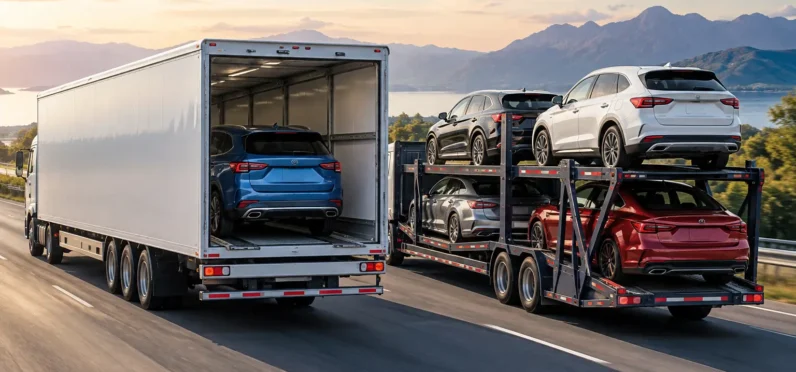
A cross-country drive can add thousands of miles, road wear, hotel costs, and lost time to your move. Shipping your vehicle avoids that burden, but one decision shapes both your price and your peace of mind: enclosed versus open vehicle shipping. The right choice depends on the vehicle, the route, the season, your budget, and how much exposure you are comfortable accepting in transit.
Open transport is the standard choice for most cars, trucks, and SUVs. Enclosed transport adds a covered trailer and a higher level of protection for vehicles that need it. Neither option is automatically better. The best fit is the one that protects your vehicle appropriately without paying for more service than your situation requires.
Enclosed Versus Open Vehicle Shipping at a Glance
An open carrier is the familiar multi-car trailer seen on highways. Vehicles are secured on upper and lower decks and remain exposed to normal outdoor conditions during transportation. Open carriers move a large share of the vehicles shipped across the United States because they are widely available, efficient, and typically the most affordable option.
An enclosed carrier transports vehicles inside a covered trailer. The vehicle is protected from rain, snow, road debris, dust, and direct sun exposure. Many enclosed carriers also use equipment and loading practices suited to low-clearance, high-value, or collectible vehicles, though details can vary by carrier and trailer type.
The practical difference is straightforward: open shipping provides professional vehicle transport at a lower cost, while enclosed shipping provides added protection from the outside environment. Both require careful pickup and delivery inspections, clear communication, and a qualified carrier.
When Open Vehicle Shipping Makes the Most Sense
For a daily driver, family SUV, pickup truck, or standard dealership vehicle, open shipping is usually the sensible choice. It is the option many people use when relocating for work, sending a vehicle to a student, buying a car from another state, or moving between seasonal homes.
Open carriers are more common than enclosed carriers, which can make routing easier and provide more pickup-date flexibility. If you are shipping from a major market such as Dallas, Miami, Los Angeles, or New York, there may be more carrier capacity available than on a remote route. Availability still changes with season, distance, vehicle size, and the timing of your request.
Open transport also works well when the vehicle will be driven regularly after delivery. Road dust or weather exposure during shipping may be inconvenient, but it is often not worth the extra cost of a covered trailer. A wash after delivery is a reasonable trade-off for many owners.
That does not mean open shipping is careless. Vehicles are loaded, secured, and transported by professional auto carriers. Before pickup, the driver documents the vehicle’s visible condition on a bill of lading. At delivery, you inspect it again before signing. This record matters regardless of the carrier type you select.
When Enclosed Shipping Is Worth the Higher Price
Enclosed transport is often the better choice when a vehicle’s condition, value, or design makes extra protection worthwhile. Classic cars, antiques, exotic vehicles, luxury models, restored trucks, race cars, and custom-built vehicles are common enclosed-shipping candidates.
A collector vehicle with fresh paint or rare trim may not be driven in ordinary weather at all. For that owner, exposure to highway grime, rain, or loose road material may be an unnecessary risk. The same thinking can apply to a recently purchased luxury vehicle traveling across the country before you have even had the chance to drive it.
Low ground clearance is another reason to ask about enclosed options. Some specialty carriers use lift gates or loading systems that can reduce the risk of scraping during loading and unloading. This is not guaranteed with every enclosed trailer, so share the vehicle’s clearance, modifications, and condition when requesting a quote. Accurate details help the transport coordinator match your vehicle with an appropriate carrier.
Enclosed shipping can also make sense during difficult weather periods. A covered trailer does not eliminate every transport risk, and it will not make a snowstorm disappear from the route. It does, however, shield the vehicle from direct precipitation and much of the road spray that an open-carrier vehicle can encounter.
Cost, Timing, and Availability: The Real Trade-Offs
Enclosed shipping generally costs more than open transport because enclosed trailers carry fewer vehicles, have more limited availability, and deliver a specialized service. The exact difference depends on the route, vehicle dimensions, season, fuel conditions, pickup accessibility, and how quickly you need the vehicle moved.
The lowest quote is not always the best quote. A price should make sense for the equipment requested and the route being covered. If an enclosed quote seems unusually low, ask what type of trailer is planned, whether the carrier is properly licensed and insured, and what pickup window is realistic. Clear answers are more valuable than a number that changes later.
Timing can be different, too. Open carriers operate on more lanes and can often offer more scheduling options. Enclosed capacity may be tighter, particularly for rural pickups, short routes, or dates around holidays. Booking early gives you more choices and reduces the pressure of trying to secure a carrier at the last minute.
If your schedule is fixed, say so from the start. There is a difference between an ideal pickup date and a hard deadline, such as a military report date, a home closing, or an auction release. A coordinator can use that information when reviewing carrier options and setting realistic expectations.
Protection Starts Before the Carrier Arrives
Whether you choose open or enclosed transport, good preparation helps protect your vehicle and your claim documentation. Clean the exterior enough to see its condition clearly, then take dated photos from several angles. Photograph wheels, bumpers, mirrors, the roof, and any existing scratches, dents, or paint chips.
Remove personal belongings, toll tags, loose accessories, and custom items that are not part of the vehicle. Carriers typically need the vehicle operable unless you have arranged inoperable transport. Keep the fuel level low, usually around one-quarter tank, and tell your coordinator about leaks, alarms, oversized tires, roof racks, or aftermarket modifications.
At pickup, walk around the vehicle with the driver and review the condition report before it is loaded. Do the same at delivery before final acceptance. If you see damage that was not documented at pickup, note it on the bill of lading and take photos before the driver leaves. Prompt, accurate documentation gives you the strongest starting point for addressing an issue.
Ask about the carrier’s cargo insurance before dispatch. Insurance terms and limits can differ by carrier, and customers should understand what coverage applies while the vehicle is in the driver’s care. For especially valuable vehicles, check whether your own auto insurer offers supplemental protection or has requirements you should meet before transport.
How to Choose the Right Shipping Method
Start with the vehicle itself. A typical late-model sedan that will soon be used for commuting usually fits open transport. A rare classic, a high-end sports car, or a vehicle with delicate custom work may justify enclosed service.
Next, weigh the route and your priorities. If you need the most economical way to move a standard vehicle from Florida to Texas, open shipping is likely the right starting point. If the vehicle is headed to a concours event, a collector garage, or a buyer expecting pristine delivery, enclosed shipping may provide the confidence you want.
Finally, consider your budget honestly. Paying extra for enclosed transport can be a smart investment, but it should serve a real need. USA Auto Shipping can help you compare carrier options, understand the expected pickup window, and coordinate the details from dispatch through delivery. The goal is not to push one trailer type over the other. It is to arrange a safe, secure move that fits the vehicle and your plans.
The best choice is the one you can feel good about when the carrier pulls away: appropriate protection, clear expectations, and no unnecessary miles added to your vehicle.