

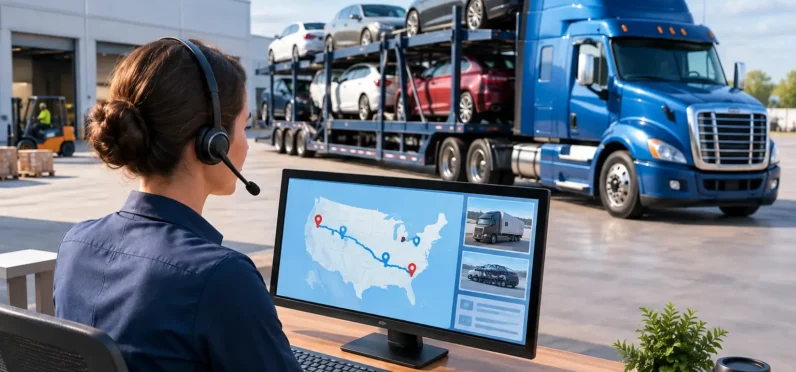
A vehicle can be ready to move, but it is not officially scheduled until a qualified carrier agrees to transport it. That is the practical answer to how carrier dispatch works: your shipment details are matched with a truck, driver, route, and pickup window that make sense for the move.
For customers, dispatch is the stage that turns an estimate into a real transportation plan. It is also where timing, vehicle type, route demand, and carrier availability come together. A good dispatch process protects you from guessing who will handle your vehicle or when the move will begin.
How carrier dispatch works from quote to pickup
Dispatch begins after you provide the information needed to move your vehicle. This usually includes the pickup and delivery locations, vehicle year, make, model, operable condition, preferred dates, and whether you need open or enclosed transport. Details matter. A standard sedan is easier to place than a non-running SUV, an oversized pickup, or a low-clearance classic car that needs specialized handling.
A broker or shipping coordinator uses those details to identify carrier options in its network. The shipment is made available to carriers running compatible routes, and drivers review whether the pickup location, delivery destination, vehicle size, timing, and offered rate fit their equipment and schedule.
When a carrier accepts the shipment, dispatch confirms the agreement and shares the essential move details with both sides. You should receive the carrier information, a pickup window, and instructions for preparing your vehicle. At this point, the move is no longer simply a quote. A driver has committed space on a trailer for your car, truck, or SUV.
USA Auto Shipping helps manage this coordination so customers are not left chasing drivers, interpreting transport terms, or wondering what happens next. The goal is clear communication from carrier acceptance through delivery.
Dispatch is not the same as instant pickup
One of the biggest misunderstandings in auto transport is assuming that dispatch means a truck will arrive immediately. Carrier dispatch means the load has been assigned, but the exact arrival time depends on the driver’s active route, traffic, weather, required rest breaks, other pickups, and delivery appointments.
Most carriers provide a pickup window rather than a minute-by-minute appointment. This is normal in long-distance vehicle transportation. A driver may be collecting several vehicles in one region before heading toward the delivery area, which keeps shared transport more affordable than hiring a dedicated truck.
If your dates are inflexible, say so before booking. A narrow pickup window, a remote location, or a popular seasonal route may require a higher rate or additional planning. For example, transport demand can increase on major relocation routes between Florida, Texas, California, and New York. Flexibility often gives dispatchers more carrier options and can help control cost.
What a carrier looks for before accepting a shipment
Carriers make dispatch decisions based on whether a shipment works operationally and financially. Price matters, but it is not the only factor. A driver also considers trailer space, weight distribution, route direction, pickup accessibility, delivery accessibility, and how much time the vehicle will add to the route.
An operable vehicle at an easily accessible suburban location is generally simpler to dispatch than a vehicle that cannot start or steer. Likewise, a large truck may take up space that would otherwise hold more than one small vehicle. Enclosed transport for a luxury, exotic, or classic vehicle uses more specialized equipment, so availability may be more limited than standard open-carrier service.
Accurate information helps the carrier make a sound decision the first time. If a vehicle is modified, oversized, lifted, lowered, inoperable, or loaded with items, disclose it early. A surprise at pickup can cause delays, added charges, or a driver declining the load because the equipment is not suitable.
What happens once your vehicle is dispatched
After acceptance, the carrier contacts you or your designated pickup contact to coordinate the collection. The driver may call when approaching the area, often with a shorter arrival estimate on the day of pickup. Keep your phone available and make sure the person releasing the vehicle has the keys and knows the plan.
Door-to-door shipping means the carrier aims to pick up and deliver as close to your requested addresses as safely and legally possible. Large transport trucks cannot always enter narrow residential streets, gated communities, low-clearance areas, or streets with parking restrictions. In those situations, the driver may arrange a nearby meeting point such as a wide commercial lot or open side street.
At pickup, the driver inspects the vehicle and records its condition on a bill of lading. This document is important. Review it carefully, note existing dents, scratches, or other visible damage, and take your own dated photos before the vehicle is loaded. The same process happens at delivery, giving you a clear record to compare the vehicle’s condition before and after transit.
Tracking and communication during transport
A dispatched shipment does not disappear into a black box. Your coordinator and carrier should keep you informed as the move progresses, especially when pickup or delivery timing changes. Weather events, highway closures, mechanical issues, and loading delays can affect a route. Clear updates do not eliminate those issues, but they do help you make plans with realistic information.
Tracking can vary by carrier and route. Some moves involve direct driver updates, while others are coordinated through the brokerage team. The most useful updates are specific: confirmation that the vehicle has been picked up, notice that it is in transit, an expected delivery range, and advance contact before arrival.
For a cross-country move, avoid making nonrefundable travel plans around a single promised delivery hour. Instead, arrange for a trusted adult to receive the vehicle if you cannot be present. Provide that person’s name and phone number before delivery so the driver can coordinate directly if needed.
Insurance, inspection, and customer protection
Qualified auto carriers carry cargo insurance for vehicles in their care, but customers should understand what that means in practice. Coverage applies under the carrier’s policy and terms, and the bill of lading inspection is central if damage is discovered. Your shipping coordinator can help explain the carrier’s insurance information before pickup and guide you on the proper steps if a concern arises.
Do not skip the final inspection because you are in a hurry. Walk around the vehicle in daylight when possible, compare it with the pickup report and your photos, and document any concern before signing the delivery paperwork. Damage claims are much harder to resolve when a possible issue was not noted at delivery.
It is also wise to remove personal belongings, toll tags, loose accessories, and valuables before transport. Carriers generally are not responsible for personal items left inside a vehicle, and extra weight can create operational or compliance problems. Leave only what is necessary for the car to be moved safely.
How payment fits into carrier dispatch
Payment timing should be clear before you book. In a typical brokered shipment, the deposit is charged after a carrier accepts the transport, while the remaining balance is paid at delivery according to the agreed method. This structure gives customers confidence that payment is tied to a real carrier assignment rather than an unconfirmed request.
Always confirm the full quoted price, what it includes, the deposit amount, the balance due at delivery, and the accepted payment method for that balance. If your vehicle’s condition or shipment details change after booking, contact your coordinator right away. Dispatch can often adjust when it has accurate information early enough.
How to make dispatch easier on your move day
The best way to support a smooth dispatch is to be prepared and reachable. Clean enough of the vehicle to make its condition visible, keep the fuel level around one-quarter full, secure or remove loose exterior items, and confirm that the battery is charged and tires are properly inflated. For an inoperable vehicle, explain exactly what does and does not work.
Give the carrier a pickup location that can safely accommodate a large truck or be ready to meet nearby. Most importantly, stay flexible within the agreed window and communicate quickly if your availability changes. Dispatch works best when the driver, coordinator, and customer all have the same accurate information.
Your vehicle move does not need to feel complicated. Once the right carrier accepts the shipment, good dispatch turns a long-distance logistics task into a managed plan: clear pickup coordination, careful inspection, practical updates, and a prepared handoff at delivery.