

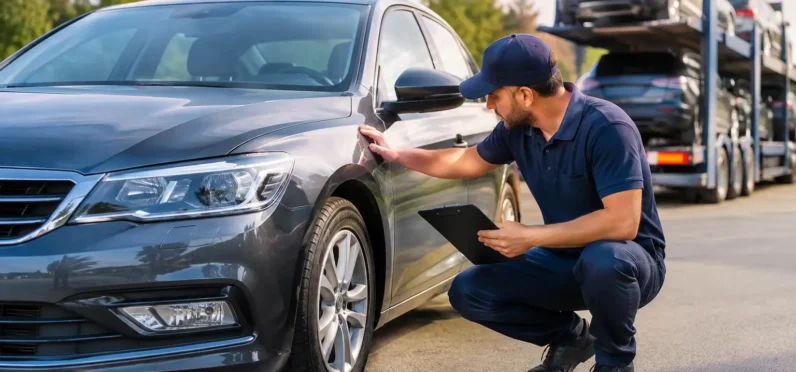
A vehicle inspection takes only a few minutes, but it creates the record you may need if a question comes up after delivery. Knowing how to inspect a car before transport means documenting its condition clearly at pickup, reviewing the carrier’s paperwork, and repeating the process before you sign at drop-off. It is one of the simplest ways to protect your vehicle and your peace of mind.
The goal is not to make your car look perfect. Normal wear, existing scratches, and small dents are common. The goal is to make sure those items are accurately recorded before the carrier takes possession of your vehicle.
Why the pre-transport inspection matters
Your pickup inspection establishes the vehicle’s baseline condition. It is normally recorded on a bill of lading, sometimes called a vehicle condition report. This document identifies visible damage, notes the vehicle’s operating condition, and is used again when the car is delivered.
If a new issue is found at delivery, the pickup and delivery records help show whether it happened while the vehicle was in the driver’s care. That is why a quick walk-around without photos or paperwork is not enough, especially for a classic car, luxury vehicle, recently purchased car, or vehicle traveling cross-country.
A good inspection also prevents avoidable confusion. A carrier cannot be expected to account for a scrape that was already present but never documented. Clear records protect both the customer and the carrier.
Prepare the car before the carrier arrives
Inspection is easier when the vehicle is reasonably clean. You do not need a professional detail, but dirt, road salt, and heavy dust can hide scratches, paint chips, and small dents. A clean exterior gives you and the driver a fair chance to see the condition of each panel.
Choose a well-lit place for pickup whenever possible. Daylight is best. If pickup happens after dark or in a parking area with limited lighting, use your phone flashlight and take extra photos. Ask the driver to note that the inspection occurred in low-light conditions if you cannot clearly see the paint and body panels.
Before the appointment, remove personal belongings and valuables. Auto carriers are focused on moving the vehicle safely, not transporting household goods. Personal items can shift, create damage inside the car, add weight, and may not be covered under carrier cargo insurance. Leave only the items needed for the car to operate, such as the keys, any required remote, and basic documents requested for transport.
Also make sure the vehicle is accessible and functional unless you have arranged shipment for an inoperable vehicle. Check that the battery has enough charge, the tires are inflated, and the fuel level is around one-quarter full. Too little fuel can make loading difficult; too much adds unnecessary weight.
How to inspect a car before transport at pickup
Start with a slow, methodical walk-around with the driver. Do not rush because a carrier has other pickups scheduled. A professional driver expects this step and should give you time to review the vehicle together.
Look at the car from several angles, then inspect each major area: the front bumper and hood, roof, windshield and windows, doors, side mirrors, quarter panels, trunk or tailgate, rear bumper, wheels, and tires. Pay attention to low areas, where curb marks and scuffs are easy to overlook, and to the roof, which can be missed when inspecting a tall SUV or truck.
Take wide photos of all four sides of the vehicle first. Then take close-ups of existing imperfections. Photograph scratches, dents, cracked trim, chipped paint, wheel rash, broken lights, and any loose exterior part. Include a wider shot that shows where the damage is located, followed by a close-up that shows the detail.
A short walk-around video can be useful as an additional record. Move slowly, speak the date if you wish, and capture the vehicle from every side. Photos remain especially helpful because they make individual marks easier to review later.
Do not forget the interior when it is relevant. Photograph torn seats, cracked dashboards, damaged controls, stains, or existing warning lights. For specialty, collector, or high-value vehicles, consider documenting the odometer, dashboard, undercarriage areas that are visible, and any removable accessories. Enclosed transport may be the better fit for a vehicle with low ground clearance or a finish that needs added protection from weather and road exposure.
Review the bill of lading before signing
The driver should prepare a bill of lading or condition report at pickup. Read it before you sign. Check that the vehicle description, VIN or identifying information, pickup location, and noted damage are correct.
Marks and abbreviations on these forms can be easy to miss. If you do not understand a notation, ask the driver to explain it. If a scratch or dent is missing, request that it be added. You can also write a note on the document if needed. Keep a copy, whether it is paper or digital, along with your photos and videos.
The bill of lading is not a formality. It is the handoff record that connects pickup to delivery. Signing it without reviewing the condition section can make a later claim more difficult.
Record the vehicle’s condition beyond the body panels
Exterior condition gets the most attention, but a few operational details deserve a quick check as well. Photograph the odometer reading and fuel gauge. Note warning lights already showing on the dashboard, especially if the vehicle has a mechanical issue or is being shipped inoperable.
Check that any special loading instructions are communicated clearly. For example, a lowered sports car may need ramps with the right angle of approach. A vehicle with a weak battery, nonworking parking brake, oversized tires, or an intermittent starting issue should be disclosed before dispatch, not when the truck arrives. Accurate information helps the transport coordinator match your shipment with a carrier equipped to handle it safely.
If you are shipping a vehicle after an online purchase and cannot attend pickup, ask a trusted seller, friend, dealership representative, or family member to complete the inspection. They should take the same photos, review the bill of lading, and send you copies immediately. Remote buyers should not rely only on a seller’s verbal description of the car’s condition.
Inspect the vehicle again at delivery
Delivery is the second half of the process. Before signing the final bill of lading or releasing payment due at delivery, walk around the vehicle with the driver and compare it with your pickup photos and condition report.
Inspect the car before moving it away from the delivery location. Look closely at the same areas you reviewed at pickup, including bumpers, mirrors, wheels, roofline, glass, and lower body panels. Open the doors and check the interior if it was documented at pickup. Start the vehicle when appropriate, check the dashboard for new warning lights, and confirm that it has been delivered in the expected condition.
Weather, darkness, and a tight delivery street can make inspection harder. If possible, ask the driver to move to a safer, better-lit spot nearby. Drivers often coordinate delivery around residential access, especially in dense areas such as New York, Los Angeles, Miami, or Newark, where a large transport truck may not fit directly at the address. Meeting at an accessible lot does not reduce your right to inspect the vehicle carefully.
What to do if you find new damage
If you see damage that was not documented at pickup, do not sign the delivery paperwork as though the vehicle arrived without issue. Point it out to the driver immediately and make sure it is written on the delivery bill of lading. Take clear photos from multiple angles, including wide shots that establish the location on the vehicle.
Remain calm and factual. Do not speculate about how the damage occurred. Record what you see, keep copies of all documents, and contact your transport coordinator promptly to report the issue and ask about the next steps. Timing matters because the delivery condition report is a central part of the claims process.
Avoid waiting until the next day to inspect if you can. Once the carrier has left and the paperwork has been signed without exceptions, proving a new issue can become much more complicated.
A few inspection mistakes to avoid
The most common mistake is assuming the driver’s paperwork is enough on its own. The driver’s inspection is essential, but your own time-stamped photos provide another clear record. Another is focusing only on visible body damage while overlooking wheels, glass, mirrors, and roof panels.
It is also risky to sign first and inspect later. Delivery schedules can feel rushed, but a careful review is part of the shipment process. If someone else accepts the vehicle for you, make sure they understand that they have authority to inspect and note any exceptions before signing.
A well-documented inspection does not make transport complicated. It gives you a clear starting point, a clear finish point, and the confidence to hand over your keys knowing the vehicle’s condition has been properly recorded.