

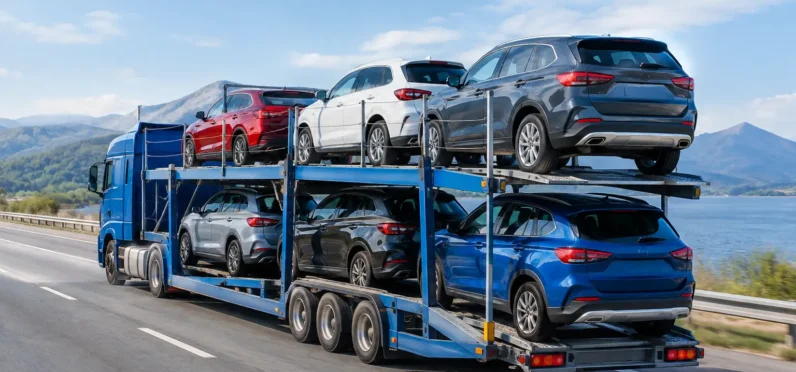
A cross-country drive can add thousands of miles, fuel costs, hotel stops, and unnecessary wear to your vehicle. Open carrier car shipping replaces that trip with a coordinated pickup, professional transport, and delivery process – usually at the most affordable rate available for long-distance auto transport.
For most cars, trucks, and SUVs, an open trailer is the practical choice. It is the same type of multi-vehicle carrier you have likely seen delivering new vehicles to dealerships. Your vehicle rides securely on a trailer with other customer vehicles, while a qualified carrier handles the road miles and USA Auto Shipping coordinates the details from dispatch through delivery.
What Is Open Carrier Car Shipping?
Open carrier transport moves vehicles on an uncovered trailer. Depending on the equipment and the vehicle mix, a carrier may haul several vehicles at one time. Because the driver can distribute operating costs across multiple shipments, open transport is generally less expensive than an enclosed trailer.
The trailer is open to normal outdoor conditions. That means your vehicle may arrive with dust, rain spots, or road grime, much as it would after a highway trip. It also means the vehicle is visible during transport. For everyday vehicles, dealer inventory, standard SUVs, and many relocation moves, that trade-off is usually well worth the savings.
Open transport is not a lesser version of professional shipping. Reputable carriers use secure loading procedures, tiedown equipment, condition reports, and cargo insurance while the vehicle is in the driver’s care. The right option depends on the vehicle, your budget, your route, and how much exposure you are comfortable with.
Why Most Customers Choose an Open Carrier
The main advantage is value. Open trailers are widely available throughout the United States, especially on active routes between major population centers such as Florida, Texas, California, and the Northeast. More available equipment often means more carrier options and a better chance of finding a pickup window that works for your move.
Open carriers also make sense when timing matters. A carrier moving several vehicles along a similar route can efficiently coordinate pickups and deliveries. That does not mean delivery happens at an exact appointment time like a local courier service. Long-haul transportation is affected by traffic, weather, required driver rest periods, loading schedules, and access at both locations. Still, a well-managed shipment provides a realistic pickup window, regular communication, and advance notice before delivery.
For a daily driver, a recently purchased used car, or a family SUV heading to a new home, paying more for an enclosed trailer may not add enough benefit to justify the cost. On the other hand, a rare classic, exotic vehicle, or freshly restored collector car may deserve enclosed protection from weather and road debris. The best choice is not always the most expensive one. It is the option that fits the vehicle’s condition and your priorities.
How the Shipping Process Works
Auto transport becomes much easier when you know what happens after requesting a quote. The first step is providing accurate shipment details: the pickup and delivery ZIP codes, vehicle year, make, model, condition, preferred dates, and any modifications. A vehicle that does not run, has oversized tires, sits unusually low, or carries added equipment may require special planning and can affect the price.
After you review carrier options and accept an agreement, the shipment is dispatched to the carrier network. A deposit is typically charged only after a carrier accepts the transport. The remaining balance is paid at delivery according to the agreed payment terms. This structure helps customers avoid paying for a carrier assignment that has not yet been secured.
Once a driver is assigned, pickup coordination begins. The carrier or transport coordinator will contact you with the expected pickup timing. If your street is narrow, heavily restricted, or difficult for a large truck to navigate, the driver may ask to meet at a nearby wide road, shopping center, or other safe location. This is common and helps prevent delays or damage caused by trying to maneuver a large trailer through unsuitable streets.
At pickup, the driver performs a vehicle inspection with you. Existing scratches, dents, windshield chips, and other visible conditions are documented on the bill of lading. Take your own clear, dated photos as well. This simple step protects everyone and gives you a reliable record of the vehicle’s condition before transport.
During transit, your coordinator can provide status updates and help communicate with the carrier. Near delivery, the driver contacts you in advance to arrange the handoff. You inspect the vehicle again, compare it with the pickup report, and sign the final paperwork once the vehicle is received.
What Affects the Cost of Open Transport?
There is no responsible one-price-fits-all quote for shipping a vehicle. Rates move with real transportation conditions, and the lowest number is not always the best value if it cannot attract a qualified carrier.
Distance matters, but it is not the only factor. A short route to a remote area can cost more per mile than a longer trip between busy metro areas. Vehicle size and weight also matter because a full-size truck or large SUV takes more trailer space and affects how the carrier loads the trailer. Operable vehicles are generally simpler and less expensive to transport than non-running vehicles, which may require a winch or extra labor.
Timing can change the rate as well. Flexible pickup dates give dispatchers more opportunity to match your vehicle with a carrier already running your route. Last-minute transport, peak relocation seasons, holiday periods, severe weather, and high-demand routes can all increase the price. If your schedule allows it, request a quote early and keep your pickup window realistic.
Be cautious with quotes that appear dramatically lower than every other option. In auto transport, a very low quote may not provide enough incentive for a carrier to accept the load promptly. A transparent estimate should reflect your route, vehicle, timing, and service requirements rather than simply offering an attractive number upfront.
Preparing Your Vehicle for an Open Carrier
Preparation is straightforward, but it matters. Wash the vehicle enough to make its condition easy to inspect. Remove personal items, loose accessories, toll tags, and valuables. Carriers are transporting the vehicle itself, not household goods, and items left inside can shift, create liability concerns, or add avoidable weight.
Leave about a quarter tank of fuel in the vehicle. That is enough for loading and unloading without adding unnecessary weight. Check the battery, tires, and fluid levels, and let the coordinator know about any mechanical concerns before pickup. If you have an alarm system, disable it or provide clear instructions for operating it.
Lowered vehicles, large tires, roof racks, spoilers, and nonstandard modifications deserve special attention. Mention them when requesting your quote, not after the carrier arrives. Accurate information allows the carrier to bring suitable equipment and plan safe loading.
Questions Customers Often Ask
Is open carrier shipping safe for my car?
Yes, for most standard vehicles, open transport is a safe and proven method used every day across the country. Your vehicle is secured to the trailer and inspected at pickup and delivery. It remains exposed to outdoor conditions, so enclosed transport may be a better fit for highly valuable or delicate vehicles.
Can I put personal belongings in the car?
It is best to avoid it. Personal property is generally not covered under the carrier’s vehicle cargo insurance, and extra weight or unsecured items can create complications. Pack your belongings separately whenever possible.
Will my vehicle be picked up directly at my house?
Door-to-door service means the carrier will get as close to your address as safely and legally possible. Large transport trucks cannot always enter residential streets with low branches, tight turns, weight limits, or restricted parking. A nearby meeting point is often the safest solution.
How long does delivery take?
Transit time varies by distance, route conditions, weather, and the carrier’s pickup and delivery schedule. Your coordinator should provide a reasonable estimate rather than promise an unrealistic exact time. Clear communication before pickup and near delivery is what keeps the process manageable.
A vehicle shipment should feel controlled, not confusing. Choose a transport plan that matches your vehicle and schedule, provide complete details early, and keep your pickup and delivery contacts available. With a properly coordinated open carrier shipment, your car can make the long trip while you focus on arriving where you need to be.