

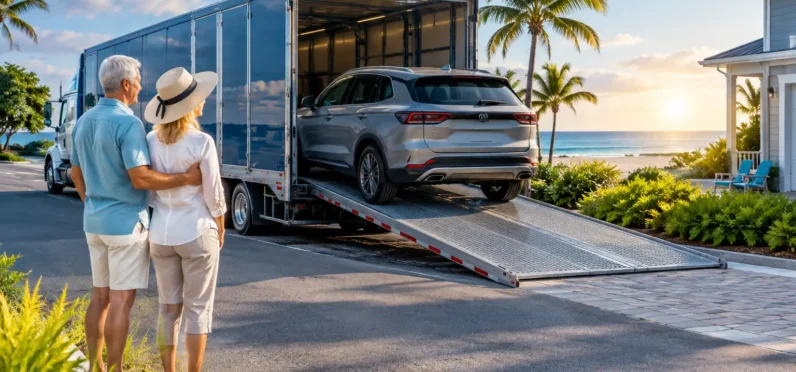
A seasonal move should feel like arriving at your warm-weather home, not like spending several exhausting days behind the wheel. Snowbird car shipping lets you fly between residences while a professional carrier transports your car, truck, or SUV. For travelers moving between the Northeast or Midwest and Florida, Arizona, Texas, or California, it can replace a long drive with a planned, trackable vehicle move.
The key is treating auto transport as a scheduled logistics service, not a last-minute travel add-on. Demand rises sharply before winter and again in spring, which affects carrier availability, pickup windows, and pricing. A little advance planning gives you more carrier options and a more controlled experience from quote through delivery.
How Snowbird Car Shipping Works
Most seasonal vehicle transport follows a straightforward process. You provide the pickup and delivery locations, vehicle details, preferred dates, and transport preference. A shipping coordinator then matches the shipment with available, qualified carriers that operate on your route.
Once a carrier accepts the move, you receive pickup coordination details. The driver or dispatcher contacts you before arrival, usually with a scheduling window rather than an exact time weeks in advance. That flexibility matters because carriers must account for traffic, weather, inspections, customer loading times, and other vehicles on the route.
At pickup, you and the driver inspect the vehicle and record its condition on the bill of lading. The vehicle is loaded, transported, and delivered near your destination. You inspect it again before signing the final paperwork. This before-and-after inspection is one of the most important customer protections in the entire process.
A brokerage and coordination service such as USA Auto Shipping helps manage those moving parts: gathering shipment details, presenting carrier options, confirming dispatch, coordinating pickup and delivery communication, and helping you understand payment timing. The goal is simple: you should know what is happening with your vehicle without having to manage a carrier network yourself.
When to Book Seasonal Car Transport
For a fall trip south, booking two to four weeks before your preferred pickup window is usually a practical target. If you have a fixed flight, a holiday deadline, a specialty vehicle, or an enclosed-carrier requirement, allowing four to six weeks provides a better buffer. The same planning applies to spring return trips, especially from Florida and other high-volume snowbird destinations.
Booking early does not always mean your car is picked up immediately. It means there is more time to secure a carrier whose route and schedule fit your needs. A reputable coordinator should explain the difference between your preferred pickup date, the pickup window, and the estimated transit time.
Avoid scheduling your vehicle pickup for the morning of your flight if you can. Give yourself at least a day of flexibility, or arrange for a trusted family member, friend, building manager, or authorized representative to release the vehicle. The same advice applies at delivery. If your arrival date is uncertain, consider using a reliable contact at the destination who can accept the vehicle and complete the inspection.
What Affects Snowbird Car Shipping Cost
Auto transport pricing is based on real operating conditions, not one fixed national rate. Your route is the largest factor. Popular routes between major metro areas often have more carrier traffic, while remote pickups or deliveries can require extra time and route adjustments.
Vehicle size and condition also matter. A standard sedan generally takes less space and weight capacity than a large SUV, pickup, or lifted truck. An inoperable vehicle requires additional equipment and labor for loading, so it should always be disclosed when requesting a quote.
The time of year can change the price as well. Late fall and early winter bring heavy demand for southbound shipments, while spring creates a similar rush northbound. Fuel costs, weather, road conditions, and the flexibility of your pickup dates also influence carrier availability.
Open transport is usually the most affordable option and is the standard choice for most snowbirds. Your vehicle travels on an open multi-car trailer, similar to the carriers commonly seen delivering new cars to dealerships. Enclosed transport costs more but adds protection from road debris and weather. It is often worth considering for classic cars, exotic vehicles, high-value luxury models, or owners who simply prefer additional protection.
The lowest quote is not automatically the best value. A price that is far below other estimates may not reflect current carrier market conditions, which can lead to delays while a shipment waits for a driver to accept it. Ask what the quote includes, how the deposit works, when the balance is due, and whether the quoted timing is realistic for your route.
Preparing Your Vehicle for Pickup
Preparation takes less time than many owners expect, but it protects both you and the driver. Wash the exterior so existing marks are easy to see during the inspection. Remove loose personal belongings, toll passes, and valuables. Most carriers and insurance policies do not cover personal items left inside a vehicle, and excess cargo can create weight or compliance issues.
Before pickup, take these practical steps:
- Photograph the exterior from several angles, including the roof, wheels, and any existing damage.
- Keep fuel at roughly one-quarter of a tank unless the carrier gives different instructions.
- Check for fluid leaks, low tires, battery concerns, or mechanical issues that could affect loading.
- Disable alarms or provide clear instructions for turning them off.
- Fold in mirrors, remove custom accessories that may sit low or extend outward, and secure convertible tops.
If you plan to leave an emergency key, make that arrangement clear ahead of time. Tell the coordinator about modifications such as oversized tires, roof racks, spoilers, lowered suspension, or a non-running condition. Accurate details help the carrier bring the right equipment and prevent surprises at pickup.
Insurance, Inspections, and Delivery
Your carrier should carry the required insurance for vehicles in its care, custody, and control, but customers should still ask for clear information before dispatch. Understand the coverage process, any limitations, and what documentation would be needed if an issue arose. Your own auto insurer may also be able to explain whether your policy has any relevant coverage while the vehicle is being transported.
The bill of lading is your condition report. Do not rush through it at pickup or delivery. Walk around the vehicle with the driver in reasonable lighting, compare the car to your photos, and note anything that needs attention before signing. This is not about expecting trouble. It is about making sure both parties have an accurate record.
Delivery is often door-to-door, meaning the driver gets as close as safely and legally possible to your address. Large transport trucks may not be able to enter narrow residential streets, gated communities, low-clearance areas, or dense downtown neighborhoods. In that case, the driver may arrange a nearby meeting point such as a wide shopping-center lot or another accessible location. A good coordinator will flag likely access concerns before delivery day.
Making the Seasonal Move Easier
Snowbird shipping works best when your travel plans leave room for real-world transportation variables. Build a few days of flexibility into your vehicle timeline, keep your phone available for scheduling calls, and make sure the destination contact understands how the final inspection and payment will work.
If you ship the same vehicle every year, save your past paperwork and note what worked well: pickup location, neighborhood access, preferred timing, and whether open or enclosed transport met your expectations. That small record can make each seasonal move easier to arrange.
Your car does not need to make the trip the same way you do. With clear expectations, careful inspection, and enough lead time to secure the right carrier, you can step off your flight ready to enjoy the season instead of recovering from the drive.