

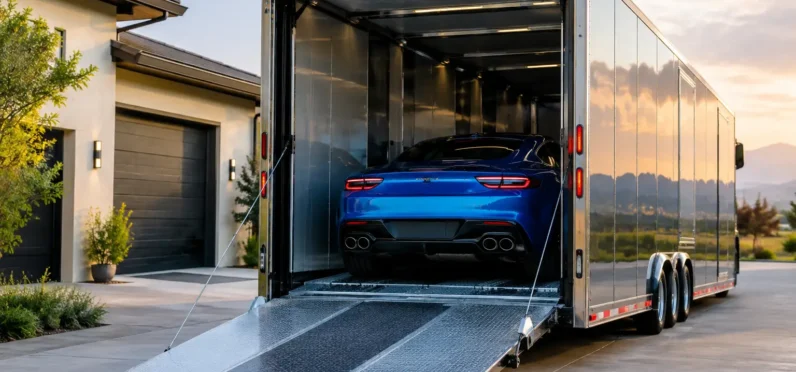
A cross-country drive puts more than miles on a vehicle. Road debris, sudden weather, construction dust, parking risks, and overnight stops can all take a toll before the car reaches its destination. Enclosed car transport removes those roadside exposures by moving your vehicle inside a covered trailer, making it a practical choice when condition matters as much as arrival.
This service costs more than standard open transport, so it is not automatically the right option for every car or every route. The best decision comes down to the vehicle’s value, its condition, the time of year, your pickup and delivery locations, and your comfort level with normal highway exposure.
What enclosed car transport means
With enclosed car transport, the carrier loads your vehicle into a fully covered trailer rather than an open multi-car hauler. The vehicle is shielded from rain, snow, sun, gravel, road salt, and debris kicked up by other traffic. It is still transported on public roads and handled at pickup and delivery, but it travels without direct exposure to the elements.
Enclosed trailers usually carry fewer vehicles than open trailers. Many are designed for high-value, low-clearance, or collector vehicles and may use lift gates or other loading equipment to reduce the risk of scraping during loading. Those capabilities vary by carrier, which is why the vehicle’s ground clearance, modifications, and operating condition should be shared when requesting a quote.
The service is often chosen for classic cars, luxury vehicles, exotics, antiques, race cars, and vehicles with fresh paint or restoration work. It can also make sense for a newer daily driver when the route is long, the season is harsh, or avoiding weather exposure is a priority.
When an enclosed carrier is the better choice
The clearest reason to choose an enclosed carrier is protection from external conditions. A collector car headed from Florida to New York in winter, for example, may encounter rain, freezing temperatures, road spray, and salt along the route. Covered transport cannot eliminate every shipping risk, but it significantly reduces exposure to those conditions.
Vehicle value is another factor, although market price is not the only measure. A family heirloom, a rare trim level, or a car that has just completed a detailed restoration may deserve extra protection even if it is not an exotic vehicle. Owners who have spent time and money preserving a vehicle’s finish often find the added shipping cost easier to justify than the uncertainty of open-road exposure.
Low-clearance vehicles are a separate consideration. Sports cars, modified cars, and vehicles with custom bodywork may require a carrier with appropriate loading procedures. Tell your transport coordinator the exact year, make, model, clearance, and modifications. A good match depends on accurate vehicle details, not assumptions made from a model name alone.
Enclosed service is also useful when presentation matters at delivery. Dealers receiving a specialty vehicle, collectors purchasing from an out-of-state seller, and owners shipping a car to an event may prefer it to help the vehicle arrive clean and protected from the trip.
What you pay for and why it costs more
Enclosed shipping is generally more expensive than open transport because enclosed trailers have limited capacity and greater operating costs. Carrier availability can also be tighter, particularly on less common routes or during busy moving seasons. The quote reflects more than the trailer type. It is shaped by the distance, vehicle size and weight, route demand, pickup and delivery accessibility, fuel costs, season, and requested timing.
Door-to-door service can be convenient, but a large enclosed trailer may not safely fit on narrow residential streets, under low branches, or in communities with truck restrictions. In that case, the driver may arrange a nearby meeting point with enough space to load or unload safely. This is a normal part of planning and can prevent last-minute delays.
Expedited pickup or a narrow delivery window may add to the cost. Flexibility usually gives the dispatch team more carrier options. If your schedule allows, share your available pickup and delivery dates rather than requesting one exact hour weeks in advance.
A lower quote is not always the better value if it leaves out essential details. Ask what type of trailer is being offered, whether the carrier can accommodate your vehicle’s condition, how scheduling updates will be handled, and what payment is due at each stage. With USA Auto Shipping, the deposit is charged after a carrier accepts the shipment, while the remaining balance is paid at delivery. Knowing that sequence upfront helps you plan without surprises.
Insurance and condition reports: protect the details
A covered trailer is an added layer of physical protection, not a replacement for careful documentation. Before pickup, clean the exterior enough to make existing scratches, chips, and dents visible. Take date-stamped photos from all sides, including the roof, wheels, windshield, and any areas of prior damage. Photograph the odometer and keep a copy for your records.
At pickup, review the bill of lading or vehicle condition report with the driver. This document records the vehicle’s visible condition before loading. Read it before signing and point out any damage that needs to be noted. Repeat the same process at delivery before signing the final paperwork.
Qualified carriers maintain cargo insurance while the vehicle is in the driver’s care, but coverage terms and exclusions matter. Confirm the carrier’s insurance information and ask questions about your particular shipment, especially if the vehicle is high-value, modified, inoperable, or carrying equipment that is not part of the vehicle. Personal belongings are commonly restricted and may not be covered, so do not treat the vehicle as a moving container.
How to prepare your car for enclosed shipping
Preparation is straightforward, but it helps the pickup go on schedule. Remove personal items, toll tags, loose accessories, and valuables. Fold in or remove detachable antennas, secure spoilers or other loose aftermarket pieces, and leave only about a quarter tank of fuel unless the carrier provides different instructions. A lighter vehicle is easier to handle safely.
Check the battery, tires, brakes, and fluid levels if the vehicle is operable. Let the driver know about any mechanical issue, alarm, special starting procedure, or air-suspension setting. A vehicle that does not run can still be shipped in many cases, but it requires the right equipment and must be disclosed before dispatch.
Keep one working key ready for the carrier. If your car has a remote, key fob, immobilizer, or unusual ignition procedure, explain it clearly at pickup. Small details shared early can save time during loading and delivery.
The shipping process should feel clear, not complicated
A well-coordinated enclosed shipment follows a simple path: provide the route and vehicle details, review carrier options, accept an offer, schedule pickup, track progress through transit, and inspect the vehicle at delivery. The important part is communication between those steps.
Pickup and delivery windows are more realistic than guaranteed minute-by-minute appointments because drivers must account for traffic, weather, loading time, and federal driving-hour rules. A reliable coordinator will keep you informed as the carrier is assigned and the schedule takes shape. If your availability changes, communicate it as early as possible so the plan can be adjusted before it affects the route.
Enclosed car transport is not about paying for a luxury label. It is about choosing a level of protection that fits the vehicle, the route, and your peace of mind. Share complete information, review the paperwork carefully, and choose the service that lets you hand over the keys with confidence.